


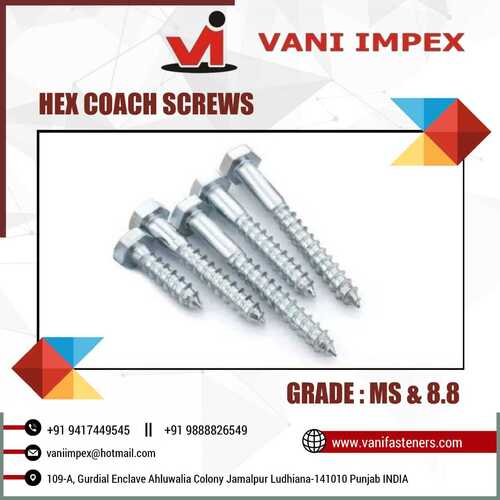
Hex Head Coach Screws Lag Screws
Product Details:
- Prop Head Hexagonal
- Weight Varies with Size, approx. 20g - 400g per screw
- Color Silver, Yellow Zinc, Grey
- Constitute Single-piece steel construction
- Features Corrosion Resistant, High Strength, Easy Drive
- Technique Hot Forged, Thread Rolled
- Product Type Hex Head Coach Screws (Lag Screws)
- Click to View more
Hex Head Coach Screws Lag Screws Price And Quantity
Hex Head Coach Screws Lag Screws Product Specifications
- Hex Head, Threaded Shank, Pointed Tip
- Silver, Yellow Zinc, Grey
- 40 mm to 200 mm
- Hex Head Coach Screws (Lag Screws)
- Heavy-duty, varies by size and application
- Zinc-Plated, Galvanized, Hot Dip Galvanized
- Single-piece steel construction
- Timber Construction, Wood Joints, Heavy Structural Fixings, Railway, Industrial Assembly
- 6 mm to 20 mm
- Corrosion Resistant, High Strength, Easy Drive
- Hot Forged, Thread Rolled
- Head height approx. 4 mm to 12 mm
- M6 to M20, Lengths 40 mm to 200 mm
- Hexagonal
- Thread major diameter 6 mm to 20 mm
- Carbon Steel, Mild Steel, Stainless Steel
- Varies with Size, approx. 20g - 400g per screw
- 12 mm to 30 mm across flats (hex head)
- DIN 571, IS 5961, BS 1494
- Wrench/Spanner Driven
- Magnetic (Carbon and Mild Steel Variants)
- Partial or Full Thread
- External Hex Head
- Forged Point for Easy Penetration
- Coarse
- Bag/Carton Packing, Bulk or Custom as required
- Region-Specific, typically 16-32 HRC
- Min. 300 MPa (Mild Steel), higher for Carbon/Alloy Steel
Product Description
Hex Head Coach Screws Lag Screws
Features:
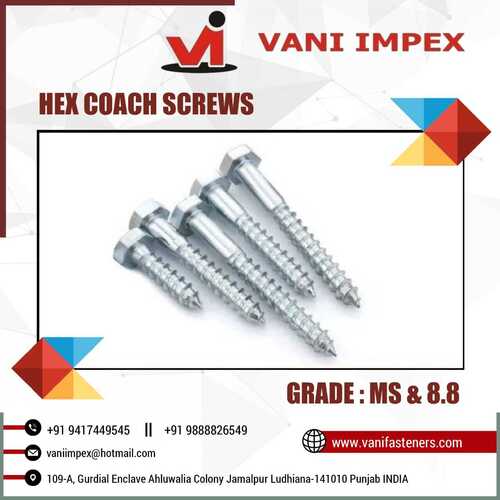
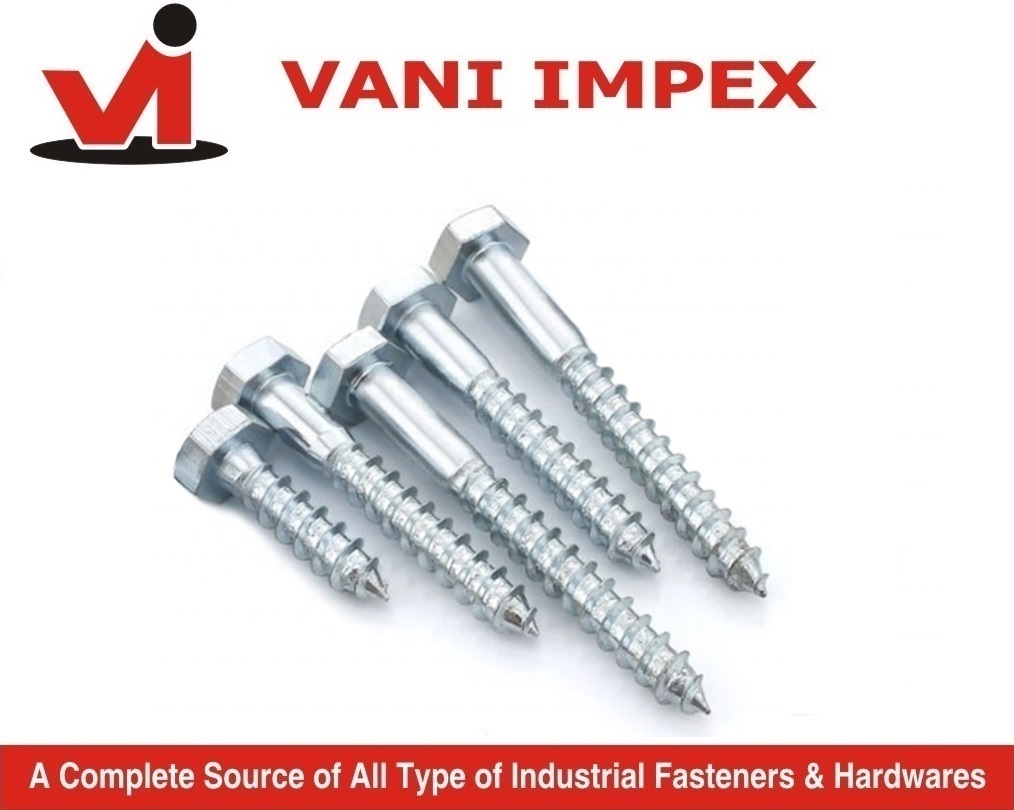
Coach screws are heavy duty screws designed for metal to wood/timber connections
Also known as lag bolts or lag screws
Hexagonal head engineered to be used with a wrench, spanner, or pliers
These screws come in a wide range of sizes
Consist of an externally threaded cylindrical shaft that tapers to a point, with a head at the other end
Unique thread drive into timber and bite the wood
Applications:
For joining heavy duty metal to wood or timber
Furniture fixing
Heavy frame fixing to metal
Technical Details:
Material: Low Carbon Steel
Coating: Zinc
Finish: White
Available Sizes:
|
Size in (MM) |
|
6 x 50 |
|
6 x 60 |
|
6 x 75 |
|
6 x 100 |
|
6 x 125 |
|
6 x 150 |
|
8 x 50 |
|
8 x 60 |
|
8 x 75 |
|
8 x 100 |
|
8 x 125 |
|
8 x 150 |
|
10 x 60 |
|
10 x 75 |
|
10 x 100 |
|
10 x 125 |
|
10 x 150 |
|
12 x 75 |
|
12 x 100 |
|
12 x 125 |
|
12 x 150 |
Versatile Application and Design
Hex Head Coach Screws are engineered for use in diverse settings such as timber constructions, heavy structural fixings, railways, and industrial assemblies. Their external hex heads and single-piece steel construction ensure durability and ease of use, making them suitable for a broad spectrum of professional and industrial needs.
Reliable Performance and Compliance
These lag screws are meticulously manufactured to comply with DIN 571, IS 5961, and BS 1494 standards, guaranteeing consistent quality and reliable strength. Available in partially or fully threaded shanks with a minimum tensile strength of 300 MPa, they cater to both standard and heavy-duty applications.
Corrosion Resistance and Finish Options
Choose from zinc-plated, galvanized, or hot dip galvanized surface treatments, ensuring the screws exhibit superior corrosion resistance. The diverse color options, including silver, yellow zinc, and grey, provide both aesthetic and functional benefits for varied environments.
FAQ's of Hex Head Coach Screws Lag Screws:
Q: How are Hex Head Coach Screws typically installed in timber or wood joints?
A: Hex Head Coach Screws are driven into pre-drilled holes using a wrench or spanner, engaging their forged point and coarse thread for secure anchorage in timber or wood joints. This method ensures optimal stability and load-bearing capacity in assemblages.Q: What standards do these lag screws comply with and why is it important?
A: These lag screws adhere to DIN 571, IS 5961, and BS 1494 standards, ensuring consistency, safety, and high mechanical performance in industrial and structural applications. Compliance assures users of the screws' reliability and suitability for critical fixings.Q: When should I choose a particular surface treatment for these screws?
A: Select zinc-plated or galvanized finishes for general corrosion resistance, while hot dip galvanized screws are better suited for outdoor or highly corrosive environments. The choice depends on exposure and environmental demands of your project.Q: Where can Hex Head Coach Screws be used most effectively?
A: They are best utilized in timber construction, railway fastening, industrial assemblies, and heavy structural fixings. Their strong threading and forged point make them ideal for applications requiring robust, secure fastening in wood or similar materials.Q: What benefits do partial and full thread options offer?
A: Partial threads facilitate stronger clamping force in wood joinery by leaving a shank for pulling materials together, whereas full threads maximize grip and holding power throughout the screw's length, ideal for applications demanding maximum withdrawal resistance.Q: How does the manufacturing process ensure high strength and durability?
A: Hot forging and thread rolling techniques are used, resulting in a single-piece steel construction with controlled hardness (typically 16-32 HRC). This process increases both tensile strength and mechanical resilience, supporting heavy-duty applications.
Price:
- 50
- 100
- 200
- 250
- 500
- 1000+

Other Products in 'Scaffolding Accessories' category


- 109-A, Gurdial Enclave, Ahluwalia Colony, Jamalpur, Chandigarh Road, Ludhiana - 141010, Punjab, India
- Phone :08045800618

- Mr Amit Gupta (Partner)
- Mobile :08045800618
- Mobile number :+919417449545, +919888826549
- Send Inquiry
 Send Inquiry
|


 Send Inquiry
 Send SMS
 Call Me Free
Developed and Managed by Infocom Network Private Limited.

